


About SKYLIGHT TEA
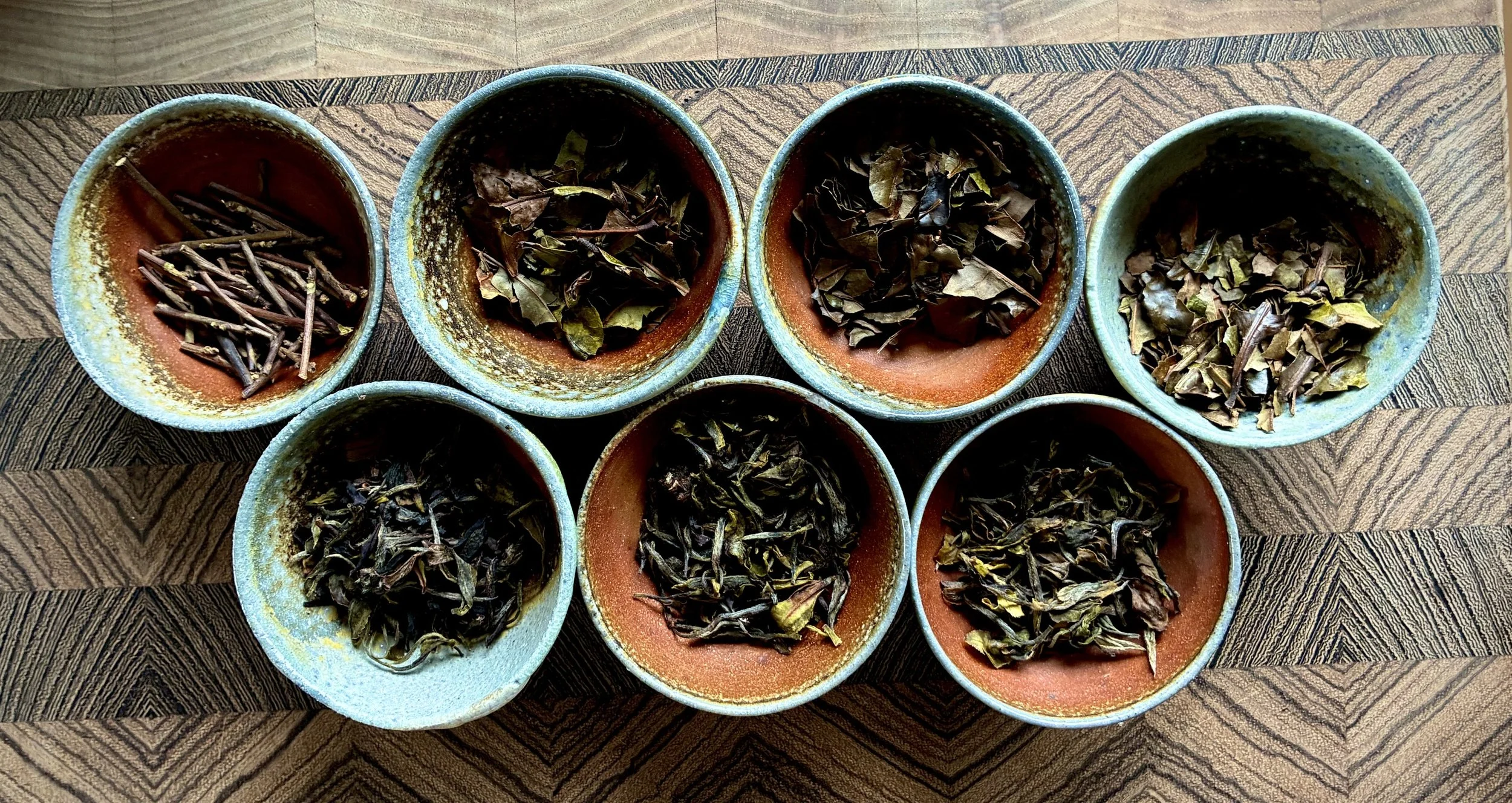
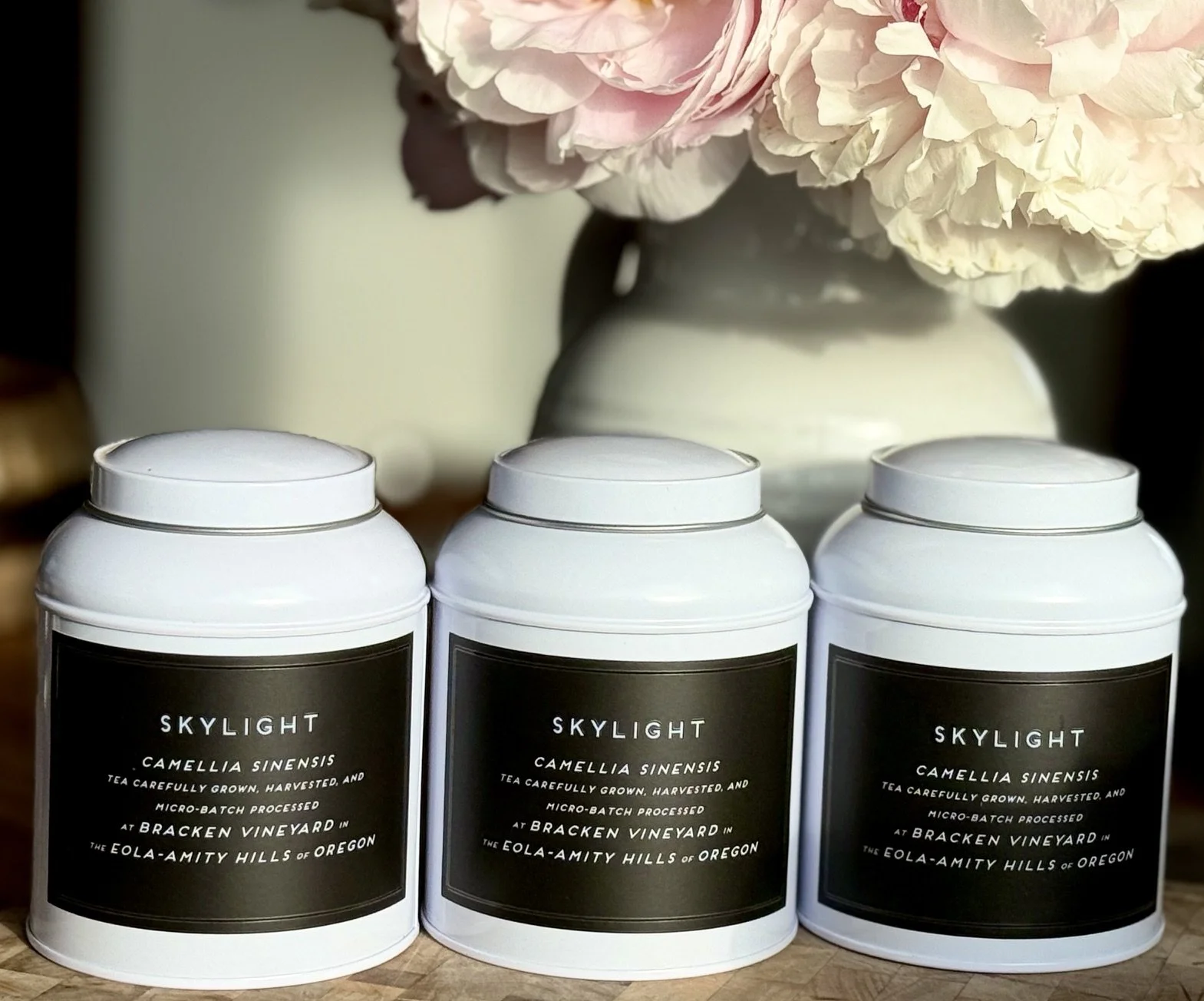
Skylight is a collection of limited production teas that I hand-harvest and hand-process with precision. Each batch represents several hours of labor; they are micro-scale lots with extremely limited availability and are singular experiences meant to be enjoyed with the Eastern brewing methods found in Asia.
Sales help continue my pioneering work in understanding the potential for te growing in the Eola-Amity Hills of Oregon.
Brewing guidance is offered below for your reference, but please reach out if you need help navigating Eastern brewing methods in order to truly be able to enjoy these teas. This effort is intended to help elevate and inspire an understanding of the production and service standards of craft tea in America. Beverage program managers can reach out to me for information about restaurant availability.
For more info about this project, check out the recent article by food and tea writer Max Falkowitz here.
Also reach out to me if you are interested in obtaining my Grouse Creek Maple Sugar. This is a finishing sugar with an intense maple flavor, produced from sap I hiked out he woods of New York State and concentrated into a stable essence of the forest from which it came.
These are products of terroir expressed through techniques honed by generations of practitioners who have shared their plantcraft across centuries. I am grateful to those who came before me and shared their knowledge.
Shelby Perkins
info@perkinsharter.co
TEA Terroir and BRACKEN
My teas represent the first Camellia Sinensis to be grown in the Eola-Amity Hills. When I arrived at Bracken I was keen to experiment with growing tea, and purchased several dozen plants from Minto Island Tea Growers. Minto Island is generally known as the pioneering tea outpost of Oregon - planted over three decades ago. Their tea gardens are grown in the sedimentary soils along Willamette River, in a sheltered area amidst tall trees. Our site, of course, is quite exposed and windy, with volcanic soils - so these first plants I sourced from Minto expired within the first season. Totally unfazed by this sheer failure, and determined to tackle the challenge from a new direction, I purchased seedlings from yet another local nursery. These second set of seedlings were grown from seeds sourced from Korea - a variety with smaller leaves that is said to be more cold resistant than many other clones of the tea species partially due to its relatively smaller leaf size. Sure enough, these plants have now endured four winters of ice storms, wind…and all sorts of hail. After winter has its way with them, these bedraggled little critters are quite amazing in that they regenerate. Their tender leaves of Spring and Summer surprisingly provide us with some beautiful, unique teas. I set to picking, working with much care and mindfulness through the plants - taking only the most tender buds and leaves. Then, after many hours of rolling and drying these leaves, I am able to brew these leaves in search of some consistent semblance of terroir. Tea processing is endlessly complex and interesting - and I can guarantee you that there is nothing efficient or cost-effective about this work - at all. Rather, it is a passion for something drives us to focus and improve. It is my hope these tea oddities, these labors of love that have captivated me, increasingly help inform my understanding of the uniqueness of Bracken. Each growing site has its individuality, as does each tea and preparation.
A Loose leaf PRIMER
Obviously, the United States does not have an established culture of loose leaf teas to the extent that societies in Asia have built. Some teas have affinities for certain conditions, so I offer here some basic pointers towards a tea brewing methodology that I hope will bring you much enjoyment and fulfillment in steeping our teas - a means to bringing out their noblest qualities. There are a range of tools and equipment that can improve, refine, and heighten the tea making experience. However, all you need to begin is tea, a teapot, a cup, and a way to boil water. Do not despair if you do not have a teapot, as an infuser, a clean French press, or a pitcher and mesh strainer can work. From there, I would suggest using a digital scale (preferably accurate to 0.1 g) and an electric kettle. These will go a long way to make your tea brewing faster, more accurate, and more consistent. Then, I would recommend acquiring a high-quality, all-purpose teapot, such as a well-built kyusu or gaiwan. Using proper teaware will make the tea taste better and elevate your experience.
Measure out your tea and water
If you have no scale, then you can get by with using a scoop or spoon, as has been done for centuries. Each tea has a different density, but a tablespoon of loose green or oolong style tea is about 2.5 grams. I recommend starting with around 2-4g per 100ml of water to begin. Once you work out how much tea you need, add it into the teapot.
Adjust your Water Temperature
Different teas brew best at different temperatures. While many black teas and oolongs prefer boiling water, most green teas prefer a milder temperature, around 160-176°F. If you have no means to measure water temperature, just pour boiling water into your cups first, and then into the teapot. Pouring boiling water into a cold piece of teaware cools the water by roughly 10°C, while heating up the teaware. So, by pouring it into the cup, then into the teapot, not only is the water the right temperature, but you’re also using just the right amount of water for your service.
Managing Infusion Time
It is critically important to time your steeps and pour out all of the tea until the last drop. Leaving any tea in the teapot with the leaves will cause it to over-steep and become bitter. If you have brewed more tea than your cup can hold or you are making tea for multiple people, pour the tea into a small pitcher first - and then serve with a consistent strength and temperature.
Resteep
All Camellia Sinensis teas can be re-infused, often many times. Typically, green teas are good for at least three infusions. The second should only be for a few seconds, and the third should be for around 30-45 seconds. Basically, the subsequent infusions tend to need more time than the first to extract. If you feel the flavors are absent after a few steeps - then go for it - brew for 10 minutes and you’ll be surprised how much flavor is still contained in the leaves!

Brewing SKYLIGHT TeA
Yellow or Green Tea
2-3 Level Teaspoons of Leaf
(2.5-3 grams)
160°-175°F Water
30 seconds - 2 Minutes
Re-steep 3-4x
Yellow and Green Teas are very sensitive to being over steeped and can taste just awful if brewed improperly. We do not recommend exceeding any of the listed parameters for green teas. Most people who have a major aversion to green teas have actually never had one brewed properly. The first brews should be short and time can be increased with successive brews.
Blue Tea (aka “Oolong”)
3-5 Heaping Teaspoons of Leaf
(3-5 grams)
180-190°F Water
30 seconds - 3 Minutes
Re-steep 3-6x
Blue Teas tend to be more heartier, more complex teas and the time and temperature parameters can be pushed a little further than listed for heavier more flavorful brews. All forms of oolong are excellent for steeping multiple times. For multiple steeps begin with 30 second steeps and gradually increase the steep time. These teas undergo light to moderate roasting for complexity.
Red Tea
3-5 Heaping Teaspoons of Leaf
(3-5 grams)
200°F Water
60 seconds - 3 Minutes
Re-steep 3-6x
Red Teas tend to be very hearty, grounding and complex. They can take a higher brew temperature and more steeping time than many other teas. These teas are made from mature leaves and have been wok fired over and open fire.